
Gadgets and Tech
7 min read
How to Choose the Right Camera Lenses for Better Results
October 20 , 2026
By Ethan Carter
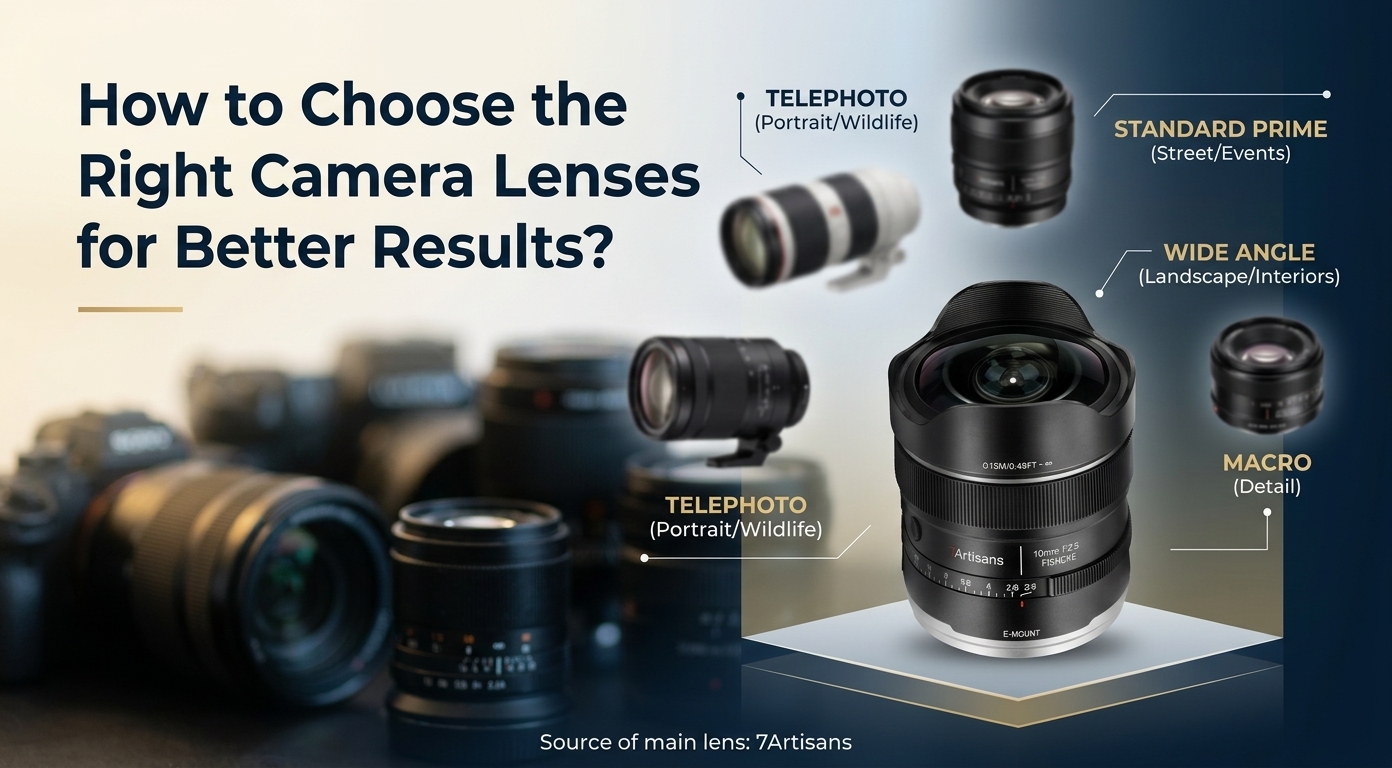
Discover how to choose the right camera lenses for sharper photos and better videos. Explore focal lengths, aperture options, camera compatibility, and specialized cine lenses while learning how to match photography lenses to your creative goals with 7Artisans US.
Choosing the right lens can feel overwhelming when your photos lack sharpness, your videos look flat, or your equipment fails to match your creative vision. Fortunately, the right camera lenses can transform your results without requiring an entirely new camera. Whether you shoot portraits, landscapes, or cinematic videos, understanding your options makes upgrading easier. With guidance from 7Artisans US, you can explore practical lens choices that match your creative goals, shooting style, and budget.
Common Problems Photographers Face When Choosing Lenses
Even experienced photographers sometimes struggle to find the perfect lens. With so many focal lengths, apertures, and features available, comparing options can quickly become confusing. First, choosing the wrong focal length can limit your creative results. For example, a wide-angle lens captures beautiful landscapes but may distort facial features during close-up portraits. In contrast, a telephoto lens isolates distant subjects but can feel restrictive in small spaces. Another common challenge involves poor low-light performance. If your images appear grainy or blurry indoors, your lens might not let enough light reach the camera sensor. Similarly, filmmakers may encounter inconsistent focus, distracting breathing effects, or exposure changes during recording. Budget also plays an important role. Beginners often purchase expensive equipment before identifying their actual needs. Consequently, they spend more money without achieving noticeably better results.
Why the Right Photography Lenses Make a Difference
Understanding how lenses work helps you avoid unnecessary purchases. Several important factors influence image quality, shooting flexibility, and overall performance.
Focal Length and Composition
Focal length determines your field of view and influences how you frame a subject. Wide-angle photography lenses capture architecture, landscapes, and interiors effectively. Meanwhile, standard lenses provide a natural perspective for everyday photography, while telephoto options bring distant subjects closer. Therefore, consider your primary photography style before choosing a lens. For example, portrait photographers may prefer an 85mm lens, while travel photographers might benefit from a versatile zoom or compact prime lens.
Aperture and Low-Light Performance
Aperture controls how much light enters your camera through the lens. A wider maximum aperture, represented by a smaller f-number, allows more light to reach the sensor. For instance, an f/1.4 lens generally gathers more light than an f/4 lens at the same shutter speed. Additionally, a wider aperture creates attractive background blur, helping portraits stand out. However, a wider aperture does not automatically make every lens the best choice. Instead, consider your focusing needs, preferred depth of field, and available lighting before making a decision.
Compatibility and Build Quality
Before purchasing camera lenses, confirm that the lens mount matches your camera body. Additionally, check whether the lens supports your camera's sensor format and essential functions, such as autofocus or electronic aperture control. Build quality matters, too. If you frequently travel or shoot outdoors, sturdy construction and comfortable handling make your equipment more practical. Consequently, choosing a durable lens can support your creative work over time.
How to Choose the Best Lens for Your Shooting Style
Instead of purchasing equipment based on popularity alone, identify your actual creative requirements first. This approach helps you select a lens that suits your subjects and working conditions.
For Portraits and Everyday Photography
Prime lenses offer a fixed focal length and often provide wide apertures in compact designs. As a result, they work particularly well for portraits, street photography, and everyday storytelling. A 35mm lens provides a wider perspective for environmental portraits and documentary work. Meanwhile, a 50mm lens offers a versatile field of view for many everyday situations. When comparing photography lenses, evaluate sharpness, background separation, minimum focusing distance, and handling comfort. These factors help you determine which lens best supports your preferred shooting style.
For Travel, Landscapes, and Versatile Shooting
Travel photographers often need lightweight equipment that handles changing environments. Wide-angle lenses capture expansive scenery, while standard zoom lenses reduce the need for frequent lens changes. If you photograph architecture or interiors, examine distortion control and corner sharpness. For landscape photography, consider how the lens performs at smaller apertures and whether it accepts useful filters. Ultimately, the best choice balances image quality with portability and convenience. Therefore, compare different options according to your typical shooting conditions.
For Filmmaking and Cinematic Videos
Video production introduces different requirements. Unlike conventional photography lenses, cine lenses often prioritize repeatable manual focus, controlled focus rotation, consistent gear placement, and dependable exposure control. These features help filmmakers pull focus smoothly and maintain consistency between shots. Additionally, some cine lenses offer matched designs across different focal lengths, benefiting productions that require frequent lens changes. However, cine lenses do not all include identical features. Therefore, check each model's specifications carefully, particularly its aperture markings, focus gearing, and compatibility with your camera rig.
Practical Ways to Improve Your Results Before Upgrading
You do not always need new equipment to improve your photographs or videos. Instead, a few adjustments can help you understand your existing lens and identify genuine limitations. First, learn the strengths of your current focal length. Experiment with different subject distances and compositions before deciding that your lens cannot deliver the desired result. Next, improve your lighting. Natural window light, reflectors, and carefully positioned continuous lights can enhance image quality without requiring expensive equipment. Additionally, use an appropriate shutter speed and stable camera support to reduce motion blur. When filming, practice smooth manual focusing and maintain consistent exposure between shots. Finally, compare your results at different apertures. Some lenses deliver their best sharpness when you stop them down slightly, although performance varies by design. Through these experiments, you can identify whether you need a different focal length, a wider aperture, improved focusing features, or simply more practice.
Why Consider Premium Camera Lenses?
Once you understand your requirements, investing in suitable equipment becomes easier. Premium camera lenses can offer improved optical performance, refined handling, consistent construction, or specialized features for demanding workflows. For photographers and filmmakers seeking affordable creative tools, 7Artisans US offers manual-focus and cine-oriented lens options worth exploring. Depending on the model, you may find features suited to portraits, cinematic storytelling, or experimental photography. Before upgrading, compare individual lens specifications instead of relying solely on brand reputation. Check the available mounts, supported sensor formats, maximum aperture, focusing mechanism, and intended use. Furthermore, consider your entire workflow. A manual-focus lens can provide excellent creative control, but it may not suit fast-moving subjects or photographers who depend on continuous autofocus. Similarly, a cine lens can benefit planned video productions but may prove unnecessary for casual everyday photography. By choosing equipment that complements your working style, you can get more value from your investment.
Benefits of Investing in the Right Lens
A well-chosen lens can expand your creative flexibility while helping you work more efficiently. For photographers, suitable optics make it easier to achieve the desired perspective, control background blur, and work in challenging lighting. Meanwhile, specialized cine lenses help filmmakers create smoother focus transitions and maintain consistent handling between shots. However, the biggest advantage comes from matching your equipment to your goals. Instead of repeatedly purchasing accessories that solve the wrong problem, you can build a practical collection around your most frequent subjects. Moreover, prioritizing versatile, compatible lenses can save money over time. This strategy helps you avoid unnecessary equipment replacements while maximizing your existing gear.
Conclusion: Make a Smarter Lens Choice
Finding the right lens begins with understanding what your current equipment cannot accomplish. Before purchasing, consider your shooting style, focal length requirements, lighting conditions, camera compatibility, and budget. Whether you need versatile photography lenses or specialized cine lenses, prioritize features that solve real problems in your workflow. Explore the options available through 7Artisans US, compare individual specifications, and select equipment that supports your creative ambitions. Ultimately, thoughtful research and regular practice can help you get more from your camera lenses. With the right equipment and techniques, you can produce sharper photographs, more polished videos, and more confident creative work.
live smarter
Shop smarter, live better, and stay ahead of the trends with our reliable recommendations!




trending
Fashion
7 min read
How to Choose Memorial Jewelry That Keeps Loved Ones Close
Health and Beauty
7 min read
Sea Moss Gel, Gummies, and Supplements: How to Choose the Right Option for Your Wellness Routine
Gadgets and Tech
7 min read
How to Choose the Best Gaming Accessories
Travel
6 min read
Concept Global Travel Bags: Smart Storage and Everyday Convenience
Home and Garden
5 min read
COZEWARE Mini-Split Air Conditioners: Energy-Conscious Home Comfort Solutions
Fitness and Sports
4 min read